





 If you’ve spent any time around real estate — especially land — you’ve probably heard the phrase highest and best use.
It sounds important.
It sounds official.
And it’s often used without much explanation.
In reality, highest and best use (HBU) is one of the most misunderstood concepts in land valuation — and one of the most critical.
This post explains how professionals determine what land is truly worth by first understanding what it can realistically be used for.
Highest and Best Land Use Is Not About Maximizing Dreams
Let’s clear this up right away.
Highest and best use does not mean:
- The biggest house possible
- The most units someone hopes to build
- The most aggressive scenario someone can imagine
Instead, HBU answers a much more grounded question:
What is the most valuable use of this land that is legally allowed, physically possible, and financially realistic?
All four parts matter. Miss one, and the conclusion falls apart.
The Four Tests of Highest and Best Use
Professional land analysis follows a sequence. Skipping steps leads to bad assumptions and overpriced listings.
1. Legal Permissibility
This is where zoning — and zoning history — come into play.
Key questions include:
- Does the lot qualify as a legal lot of record?
- Is it conforming or legally nonconforming?
- Are variances required, or is development allowed as-of-right?
- Are there deed restrictions or prior approvals that matter?
A lot can fail today’s zoning standards and still be legally buildable because it existed before those standards were adopted.
This is why land analysis often requires research — not just a glance at the zoning map.
2. Physical Possibility
Next comes the physical reality of the land itself.
This includes:
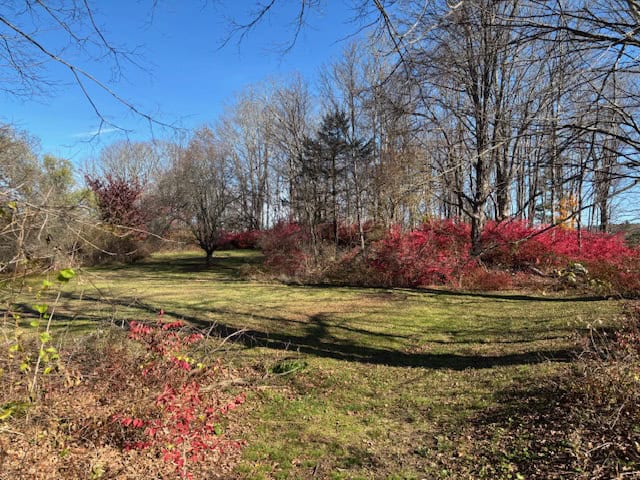
- Lot size, shape, and depth
- Road frontage
- Topography and soils
- Septic and well feasibility
- Required separation distances
- Environmental constraints (wetlands, buffers, slopes)
A lot may be legally buildable but physically constrained in ways that limit design, size, or cost.
Physical feasibility doesn’t kill value — but it often reshapes it.
3. Practical Feasibility
This is where theory meets real life.
Even if something is technically allowed, you have to ask:
- Is approval likely or speculative?
- Does the layout actually work?
- Will permitting take months or years?
- Does the risk outweigh the reward?
This is the step most online estimates ignore — and the one investors pay closest attention to.
Risk has a price. The more unknowns, the more the market discounts value.
4. Financial Reality
Finally, the market gets a vote.
Here’s the truth many landowners don’t want to hear:
Just because something can be built doesn’t mean it adds value today.
Buyers price land based on:
- Time to approval
- Engineering and infrastructure costs
- Carrying costs
- Market demand for the finished product
The highest theoretical use isn’t always the most valuable one. Sometimes a simpler, lower-risk use produces a higher price.
 Why Highest and Best Use Comes Before Value
This is the mistake I see most often:
People ask, “What’s it worth?”
Before asking, “What can it be?”
Until highest and best use is defined, any valuation is guesswork.
Two buyers can look at the same parcel and see:
- A buildable home site
- A risky entitlement project
- Or a long-term hold with uncertain upside
Each will price it differently — and all may be correct from their perspective.
Land Value Lives in the Gap Between Possibility and Risk
This is where experience matters.
Understanding HBU means knowing:
- Which possibilities are real
- Which are speculative
- And which are legally or practically off the table
That gap — between what might be possible and what is reasonably achievable — is where land value actually lives.
Coming Next: How I Actually Evaluate Land Value
Now that you understand:
- Why land is different
- And how highest and best use is determined
The final piece is valuation.
In the next post, I’ll walk through how I evaluate land value in the real world — including how comps are selected, why ranges matter more than single numbers, and how risk is priced into land sales.
👉 Continue reading: How I Actually Evaluate Land Value (And Why Guessing Is Expensive)
Final Thought
Highest and best use isn’t a buzzword.
It’s the framework that separates realistic land valuations from hopeful ones — and informed decisions from costly mistakes.
Get this part right, and everything that follows makes sense.
This update is part of the HST Town Watch Local Planning & Development series.

Connect